
Take a moment to think about how much of your life happens online.
You pay bills through mobile banking, order groceries, shop on e-commerce websites, connect with friends on social media, attend online classes, and store thousands of photos in the cloud. The internet has made life easier and has also created new opportunities for cybercriminals.
Every day, hackers attempt to steal passwords, banking information, personal data, and even business secrets. They don’t always target large corporations; ordinary internet users are just as vulnerable. In fact, a single click on a fake email or an insecure password can be enough to compromise your personal information
This is where cybersecurity comes in. Cybersecurity is no longer just a concern for IT professionals or large organizations. Whether you’re a student, a working professional, a business owner, or simply someone who is on internet, understanding the basics of cybersecurity can help protect your digital life.
In this beginner’s guide, we’ll explain what cybersecurity is, why it matters, the most common cyber threats, and the simple steps you can take to stay safe online.
What Is Cybersecurity?
I read somewhere that ‘Cybersecurity is the art of protecting computers, smartphones, servers, networks, applications, and digital information from unauthorized access, theft, damage, or any other vulnerability.’
Cybersecurity same as the digital equivalent of locking your home. Just as you lock your doors to prevent intruders from entering, cybersecurity uses technologies, processes, and best practices to keep cybercriminals away from your digital assets.
Its primary goal is to ensure that your information remains:
- Confidential – Only authorized people can access it.
- Accurate – Data cannot be altered without permission.
- Available – Information and systems remain accessible whenever needed.
From your personal memories stored on your phone to the confidential information businesses rely on every day, cybersecurity helps protect it all.
Why Is Cybersecurity Important?
The world is becoming more connected. Businesses are adopting cloud computing, remote work has become common, and almost everyone uses smartphones for everyday tasks.
And with the reliability on internet the threats also continue to evolve persistently. According to global cybersecurity estimates, cybercrime is expected to cost the world $10.5 trillion annually, making it one of the largest economic threats worldwide. The financial losses include stolen money, business disruptions, ransomware attacks, and the cost of recovering compromised systems but the impact goes beyond money.
A successful cyberattack can result in:
- Loss of sensitive personal information
- Identity theft
- Financial fraud
- Damage to a company’s reputation
- Interrupted business operations
- Loss of customer trust
Common Types of Cyber Threats
You don’t need to understand advanced hacking techniques to stay safe. Knowing the most common cyber threats is often enough to avoid becoming a victim.
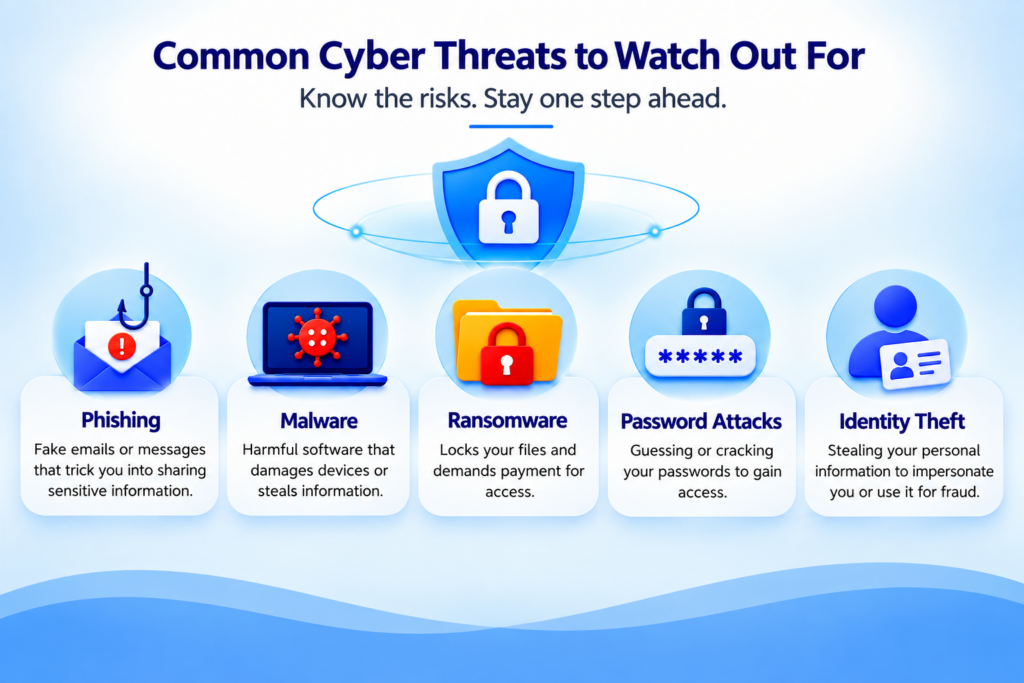
1. Phishing
Phishing is one of the most common cyber scams.
Attackers send fake emails, text messages, or social media messages pretending to be trusted organizations such as banks, delivery companies, streaming services, or government agencies.
Their goal is to trick you into sharing sensitive information like passwords, OTPs, or credit card details.
For example, you may receive an email claiming your bank account has been suspended and asking you to click a verification link. The website may look genuine, but it’s actually controlled by scammers.
2. Malware
Malware is short for malicious software.
It includes harmful programs such as viruses, worms, spyware, trojans, and keyloggers that are designed to damage devices or steal information.
Malware often enters your system through infected downloads, pirated software, malicious email attachments, or compromised websites.
3. Ransomware
Imagine turning on your computer only to discover that all your files have been locked.
A message appears demanding payment in exchange for restoring access.
That’s ransomware.
This type of attack has affected businesses, hospitals, schools, and government organizations around the world, causing operational disruptions and significant financial losses.
4. Password Attacks
Many people still use simple passwords such as “123456” or “password.”
Hackers use automated tools capable of testing millions of password combinations within minutes.
Using the same password across multiple accounts makes the problem even worse because one leaked password can unlock several services.
5. Identity Theft
Identity theft occurs when criminals steal personal information such as your name, Aadhaar number, banking details, or login credentials.
They may use this information to open bank accounts, apply for loans, make purchases, or impersonate you online.
How Does Cybersecurity Protect You?
Cybersecurity combines multiple technologies and practices to reduce cyber risks.
Here are some of the most common protections you encounter every day.
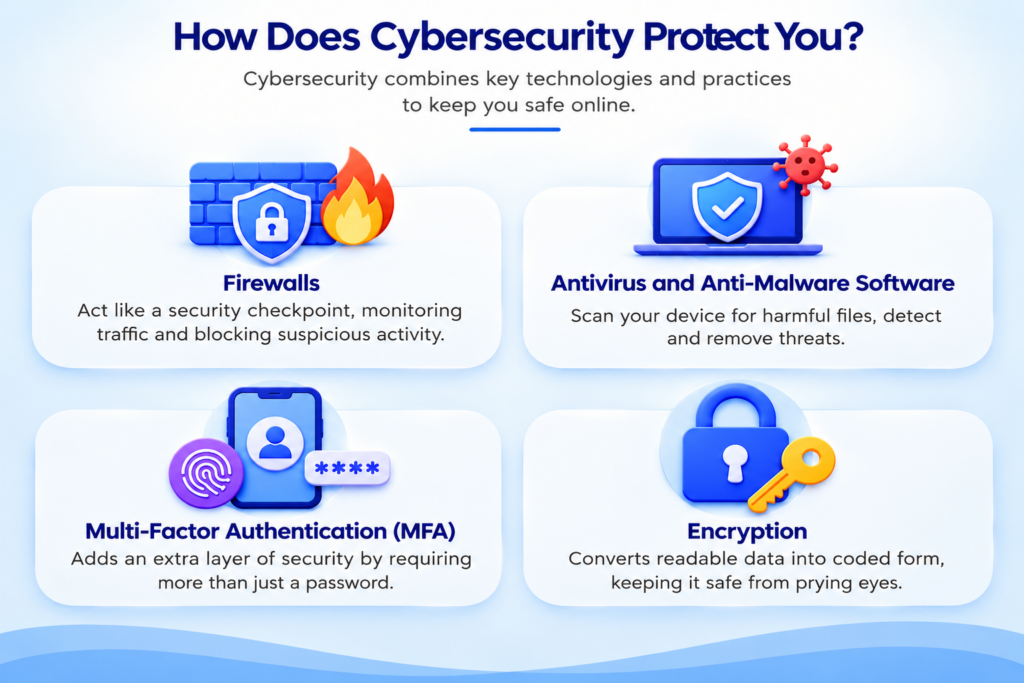
Firewalls
A firewall acts like a security checkpoint between your device or network and the internet.
It monitors incoming and outgoing traffic and blocks suspicious activity before it reaches your systems.
Antivirus and Anti-Malware Software
These programs scan your device for harmful files, detect malicious software, and remove threats before they can cause damage.
Multi-Factor Authentication (MFA)
MFA adds an extra layer of security by requiring more than just a password. After entering your password, you may also need to verify your identity through a fingerprint, facial recognition, authentication app, or one-time password.
Encryption
Encryption converts readable information into coded data that can only be unlocked using the correct key. This technology protects online banking, digital payments, messaging applications, and many cloud services.
Simple Cybersecurity Tips for Everyone
You don’t need always need an expensive software or technical expertise to improve your online security. You can start with small steps as well. Here are some of them:
- Use strong, unique passwords for every account.
- Enable Multi-Factor Authentication wherever possible.
- Keep your operating system and applications updated.
- Avoid clicking suspicious links or downloading unknown attachments.
- Download apps only from trusted app stores and official websites.
- Back up important files regularly.
- Avoid conducting sensitive transactions over unsecured public Wi-Fi or while on a call.
- Be cautious about the personal information you share on social media.
These small steps can significantly reduce your chances of becoming a victim of cybercrime.
Why Businesses Need Cybersecurity
Businesses store valuable information, including customer records, employee data, financial information, and intellectual property. A single successful cyberattack can interrupt operations, damage customer confidence, and result in regulatory penalties. Modern organizations therefore invest in security measures such as:
- Network firewalls
- Endpoint security
- Email security
- Secure Wi-Fi access
- Web application protection
- Continuous security monitoring
- Employee cybersecurity awareness training
Cybersecurity is a non-negotiable for businesses.
The Future of Cybersecurity
As technologies like artificial intelligence, cloud computing, and remote work continue to grow, cybersecurity will become even more important. At the same time, cybercriminals are using increasingly sophisticated techniques, including AI-powered phishing campaigns and highly targeted attacks.
To stay ahead, organizations are and will be investing in advanced security solutions that combine automation, threat intelligence, and continuous monitoring. However, technology alone is not enough. Cybersecurity awareness among users remains one of the strongest defences against cyber threats.
Conclusion
At its core, cybersecurity is all about awareness. The internet has given us incredible convenience, but with great convenience comes great responsibility, to protect what matters: our data and our identities.
As technology keeps evolving, so will the threats. But the thing is an informed, cautious user will always be a harder target. By staying alert and making smart choices online, you’re not just protecting yourself, you’re building a safer digital world for everyone around you.